







8 Ways to Heal Your Home
Home is where the heart is, or so the saying goes. But, what if your home makes your heart race and when you return home feels like you are standing in front of you like a bridge you’re afraid to cross…another obstacle to overcome.
It’s always surprising to me how many people don’t focus on creating a supportive space to live. Most of us don’t organize our living spaces around our well-being, like the feng shui experts of the world say; rather, we live in homes that are largely a happenstance creation that is reinforced by daily habits.
If your home doesn’t support your own healing efforts, it’s time to heal your home.
8 tips to heal your home

- Clean out clutter It should come as no surprise that the concept of cleaning out one’s closet (both literally and figuratively) will have a positive impact on both your energy and the energy of your home. The philosophy of purging items that don’t “spark joy” can find origins in both ancient Feng shui practices and modern human behavioral studies.
For thousands of years, feng shui has been used to balance one’s internal energy with that of their environment. As an energy healing practice, feng shui seeks to balance the physical elements of the universe, earth, and humanity – and, yes, this includes the furniture in your living room – with invisible forces that bind everything together. When there are too many physical elements, feng shui energies are unable to move naturally and freely.
- Household clutter and mess can feel incredibly overwhelming, only adding to the stress of everyday life that already leaves many people struggling. In fact, a research study at UCLA found that stress hormone levels increased significantly in female homeowners that had a high density of household objects. Basically, the more stuff they had in their homes, the more pressure and anxiety the women felt.1
- Give your home a breath of fresh air
Fresh air is invigorating and refreshing for both moving and still life. Since your home isn’t able to attend your Pranayama yoga class with you, throw open your windows and let it breathe a deep cleaning breath!For your home to reap the benefits of fresh air, be sure to open your windows every day. Yes, even if it is February and your home is in a cold climate, allowing your home to take a deep cooling breath every day will release built up anxiety and stale air, transforming the energy inside.
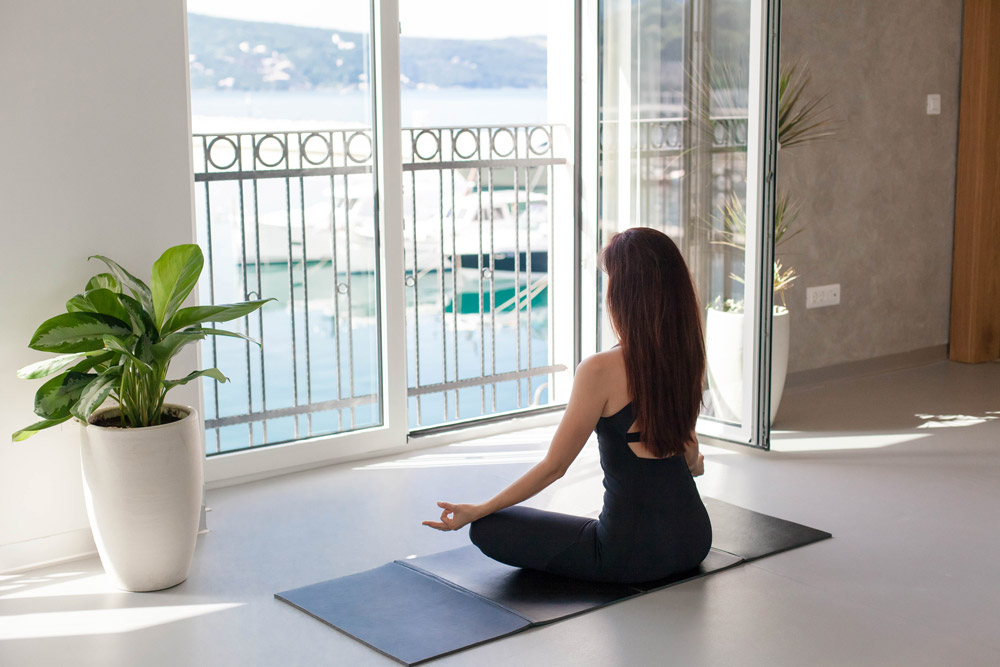
- Don’t let opening your home’s window become mundane and routine (like making your bed or brushing your teeth); take the opportunity to practice your own breathing techniques. Pranayama is the formal practice of controlling the way you inhale and exhale, helping you to manipulate your vital energies to activate or soothe your mood.
When practiced regularly, Prana breathing builds life force energies and rejuvenate healing efforts in both you and your home. Every Prana breath taken does so much more than simply taking in air; you are taking in stimuli of all forms—from sights and sounds to smells, feelings, ideas, and knowledge. Prana breathing provides the initial burst of energy that sets things in motion, enhancing your appreciation and zest for life, opening your heart and mind to new possibilities, and reinvigorating your desire for relationships that illuminate your spirit.
- Detox toxic cleaners
When it comes time to clean the physical dirt out of your house, be sure you aren’t exacerbating the problem by using toxic cleaning agents.Many people are unaware of the dangers of using widely-available home cleaners that contain toxic chemicals. Whether the cleaner makes your eyes when you spray it or you have to open the windows to air out the room because of the strong smell, these reactions are not normal and dangerous. Your body is telling you the cleaning agent you are using is highly toxic and can harm you — listen!
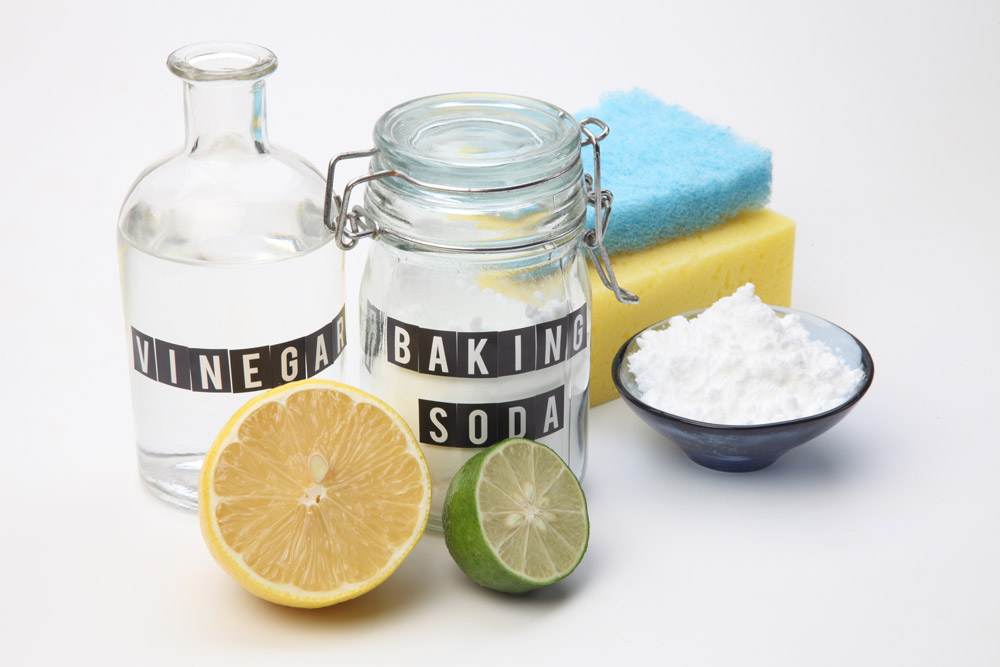
- Natural cleaners, like hydrogen peroxide, baking soda, and vinegar, are easy to use and cheaper than most commercial chemical cleaners. And, yes, they work just as well! You can add essential oils like tea tree, lavender, eucalyptus, and lemon if you want to purify your home with a fresh scent. After all, the “scents” and “fragrances” from commercial cleaners aren’t natural; they are created from chemicals in a lab and inhaling them can be dangerous.
- Bring the great outdoors inside
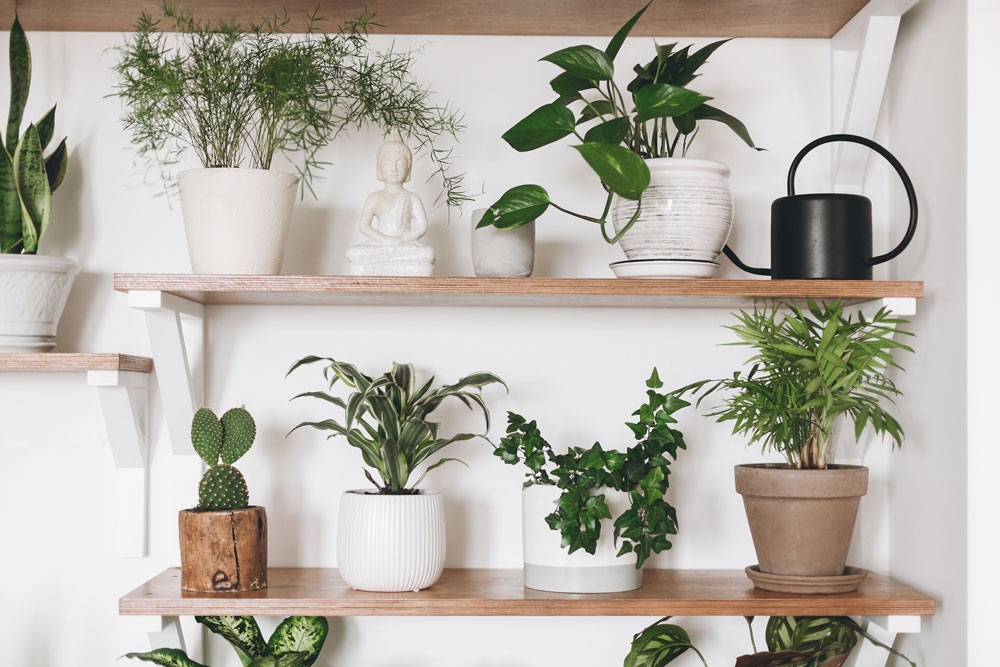
Whether you live in the middle of a big city or the mountains, your home will benefit from bringing some of the outdoors inside. One way to do this is by adding some green plants to your home; not only will your home will look beautiful, but it will be brighter and have better air qualify.Plants improve air quality by adding additional oxygen to your home and absorbing harmful pollutants, some of which occur naturally just by breathing. You don’t have to have a greenhouse or degree in botany to reap the benefits of plants. Palms, ferns, ivy, chrysanthemums, and spider plants are all easy-to-care-for plants that will improve the air quality of your home.
- Eternal sunshine of your mind
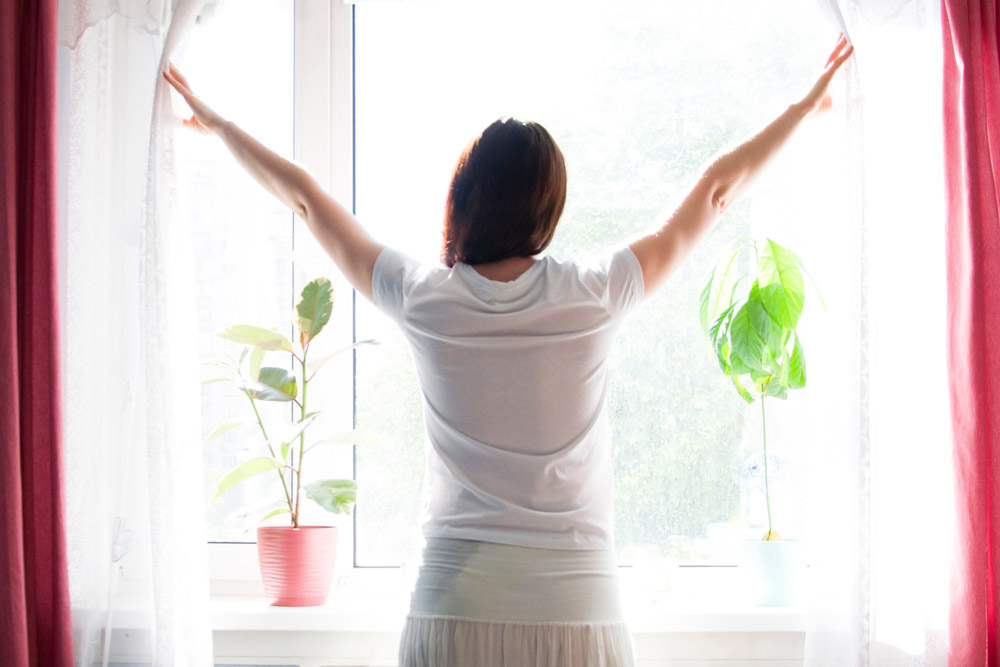
When you fill your home with sunlight, you can’t help but feel lighter, body, mind, and spirit. With your house is illuminated, it will begin to heal and radiate the type of energy that makes you feel good. Sun on your mind brings warmth to in your heart (and remember our saying? Home is where the heart is…).Moreover, your new plants can’t survive without some sunshine, so draw back those curtains and let that big healing circle in the sky provide you both some natural nourishment. Like a warm cozy embrace from the sky.
- Turn off the TV and play some music
If you are someone who falls asleep to the TV— or enjoys having it on as white noise in the background— try swapping it for some soothing music.Music is made up of vibrations, which are simply different types of energies. These waves of music will reverberate throughout your home and play a role in the positive vibrations you’ll feel as a result.
Music can have a powerful and immediate impact on your energy and mood, both positive and negative. Classic orchestral music, with sweet violins singing alongside violas and cellos that join in harmony, promote positive healing vibrations. As a result, your body will relax and you’ll feel peaceful.
However, music can have the opposite effect, too.

- Heavy metal and hard rock, with screaming guitars shredding chords accompanied by angsty and emotional song lyrics, have the opposite effect on energy and our bodies: you will be anxious and tense after the song ends.If you are looking for a music playlist that will help your home feel more zen (vs. Zeppelin), there are many great options on Spotify, YouTube, iTunes, Apple Music, and SoundCloud.
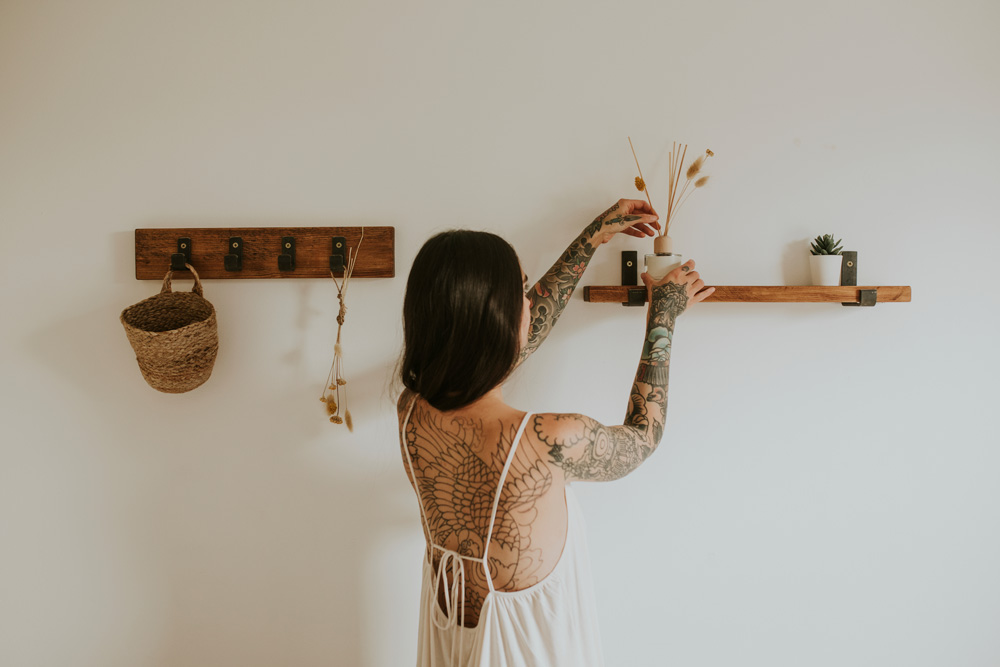
- Scents and aromas
In addition to the sights and sounds throughout your home, your sense of scent can have a profound impact on your healing capabilities and well-being.Different scents have the ability to instantly remind us of past experiences (both positive and negative). If you don’t have a scent that brings you comfort or peace, pick one! Just make sure that you are choosing a fragrance made of essential oils; many candles and diffusers available today are nothing more than chemicals that were created in a lab and will pollute your home’s air when burned/released.
- Dedicate a sanctuary for healing
While your entire home should be a place where you feel at peace, be sure that you have a place inside that always allows you to be peaceful and serene. It can be a small nook in your bedroom, a water fountain next to your bedside, or a candle in your living room. One of the best ways to heal your home is to meditate in it.You may want to go a step further and fill the space with meaningful pictures and items that make you happy. When you need to rest and restore yourself, this is the space you should turn to.

Start healing your home today
Many people don’t think about how they can improve the energy in their home, but having a healthy home can make a difference in your life. At its most basic, your home is a reflection of the state of your well-being, something that you can actively change if you aren’t happy with its current state. The tips listed in this article are all easy things that you can do to heal the energy in your home quickly.
And if you already find serenity and peace in your home, share some of your practices with us on our Facebook page.

Follow the Light
Your eyes are closed. Warm, humid air nestles on your cheeks. The air feels palpable. You lie still, rocking on what feels like water, yet, oddly, you remain dry.
You open your eyes. It’s dark. Warmly dark. Enveloping dark. Above you: a warm darkness. Below you: darkness. In front and to the behind, more dark.
It’s pleasant. Like a warm summer’s night, just as the breeze dies down when the sun finally sets.
Where are you? Where are we?
We are at the beginning. The beginning of where all consciousness begins on the journey to enlightenment. In the dark.
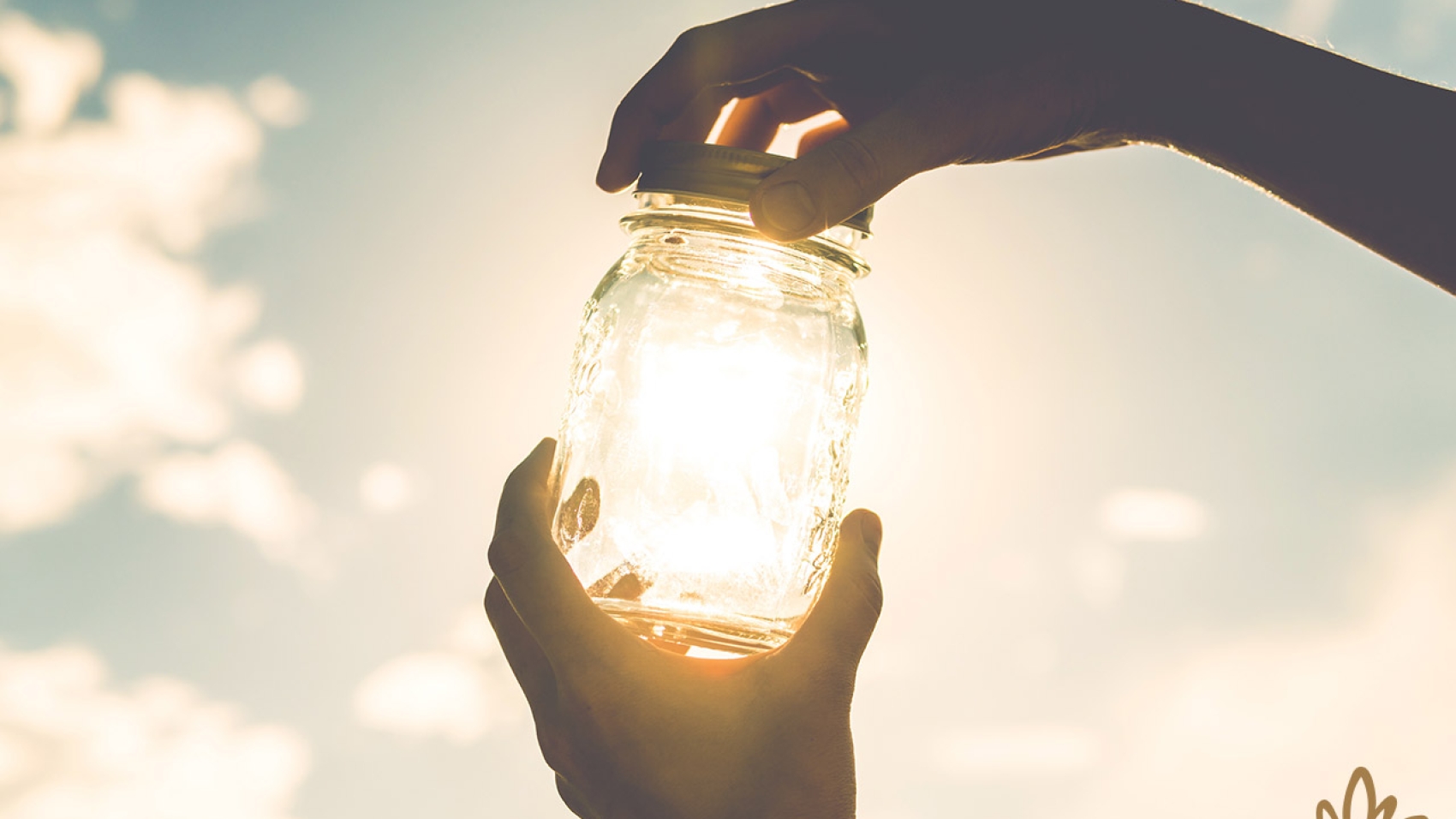
You blink once, twice, three times for good measure. A small dot in the distance. A dot that stands out against the darkness. You can see it. In fact, it’s the only thing you can see. It is, in fact, light. Illumination. Unsure why, you find yourself drawn toward the light. Pressing forward. Pushing through the darkness.
As you lean into the illumination, your own body becomes apparent. You can feel your legs walking forward. You can now see the ground beneath your feet. Behind you: shadow. You turn your head around and see that the darkness has grown more pronounced. More defined. Delineated between what is light and where there is no light.
For the first time, you feel fear of this dark. Even though, before, the dark was all-encompassing. Now, split by the light, the dark feels stronger. You can even see yourself reflected in the dark.
This is your shadow. Notice how it grows larger as you walk forth into the light. Notice how the shadows of all the lit rocks, hills, trees, and people grow greater as the light shines forth.
The light illuminates all. That is what light does.
From the ancient religions of Zoroastrianism, Hinduism, Judaism, and Orthodox Christianity, great teachers have understood that light is divine. Light, is the source of all life and consciousness. Thousands of years before scientists understood how stars fused hydrogen to helium – releasing tremendous energy and life-bringing light, primitive humans knew that the light was life.
And it is. Without the brilliance of light, we’d have no home for life. We’d have no plants to photosynthesize and produce oxygen. We’d have no warmth. We’d be cold and in the dark – huddled around the few sources of heat our planet produces.
But we have light, and we give thanks to the light. We celebrate Diwali, the festival of light that honors the victory of light over darkness. We celebrate Easter, where Christ, light incarnate, arose from the dead, having gained victory over death and Hades.
I love these celebrations. And I love that we celebrate these victories of the light over darkness yearly. Because while the religious events that we celebrate may have occurred once, the journey of light over darkness is continual.
And that is because the darkness is but the absence of light. And the greater the light expands, the more darkness we are able to see.
Return, for a moment, to our warm, humid darkness. Imagine you hold but a single candle. It extends a circle of light around you – just one foot wide. Around that: darkness. But how much darkness is there? It’s hard to say. From where you’re standing, it appears to simply be where the light stops – 1 foot away.
But grow that light. When the light grows to ten feet wide, we can see so much more. We see so much light! But we also see the limits of that light. And we see that the darkness expands far more than we originally understood. Now, darkness surrounds our circle for 10 feet instead of 1.
This is why we always celebrate the victory of light over the dark – because the light’s illumination is continually expanding. And as the dark retreats, more is uncovered. Our shadows grow longer. This growing darkness may give us pause – may make us yearn for the days when our light was smaller – when the world was simpler.
When these moments feel overwhelming, when the pull of the darkness feels so warm, I want you to do one thing: find the light. Find the tiny, pin-drop light that was there at the beginning. And hold that light true. That light is your compass. Stand in the light. Sit in the light. Lie down in the light. Bask in that one dot of light, until it overwhelms you with safety and security.
And when you’re ready, walk toward it once again.
It’s a long journey, and the shadows the light raises may be imposing. But the light is life, and by journeying through the light, your true self will be illuminated.
Follow the light, bathe in the light. Come celebrate the light with me.
If you’re a guy or a gal ready to bring more light into your own world, and into the world of those closest to you, join Deborah for a transformational seven week journey as she helps you Awaken the Divine Feminine – an energy source essential for light…and enlightenment. Click here to join the journey now.

The Price of Pride: Pinkerton the Pig and Jesus on a Donkey
“Who would care for a sand witch?”
That’s the opening line of one of my favorite children’s books. Hey! Adults can love children’s books too!
It’s called Me First, and it tells the story of a pig named Pinkerton who has to be first for everything. I know we all know somebody like that in our lives.
Anyway, in his haste to be first, Pinkerton thinks he hears someone asking if he’d like a “sandwich” (you know, lunch), while in reality it is a Sand Witch: a mysterious magical creature asking if he will take care of her.
Of course, in his haste to be first, he gets trapped being the servant of the Sand Witch, who ultimately teaches him that first is not always best.
It’s a cute story for growing minds, but the lessons it teaches can resonate with us through life: humble yourself, be kind, first is not always best.
I’ve been thinking a lot about being humble these days as we head into Spring, and with Spring, major holidays for the Abrahamic religions: Passover, Easter, and (later) Ramadan.
In all of these religions, we see the common theme of humbling oneself, as well as the dangers that befall those who choose pride.
Let’s take a look at the Passover Story. Moses leads the Hebrews out of captivity, eventually leading them into the promised land. Moses, a man who humbled himself before his God, was vested with great authority and power in order to save a people, who had been toiling under the crack of Pharaoh’s whip without mercy.
But take a look at Pharaoh for a moment. Here’s a man who when Moses says, “let my people go,” decides “absolutely not.” “Your people are my property.” Pharaoh considered himself to be a living incarnation of Horus, a powerful Egyptian God, and rejected any attempt by this foreign God, to mettle in his affairs.
What happened as a result? Famine, plague, pestilence, death. After every curse, Moses begged Pharaoh, “let my people go,” but this prideful, arrogant man could not humble himself before this foreign God, no matter the might this God showed. Pharaoh, blindly, thought himself to be greater. Ultimately, he and his armies were swept away in the Red Sea and drowned as divine punishment for his inability to see reason and accept defeat with grace.
This is the price of pride. This is the price of looking at the divine and saying, “my way or the highway.” Pride cometh before the fall.
As an inversion of this story, I am struck by the true humility that the Christ showed in his ministries. This coming Sunday is Palm Sunday, a day that Christians mark when Christ rode into Jerusalem.
How did Christ ride into Jerusalem? On a donkey.
I need you to get in the mindset of a citizen of Jerusalem back then. The Messiah was a promised figure who would restore Jerusalem’s independence. He would come in as a conqueror and expel the invaders who had Israel under their yoke.
What do conquerors ride in on? Horses.
Here’s a man – a man who calls himself the Messiah, the savior, who rides in on an ass.
What? That’s not what the Messiah is supposed to look like!
Less than a week later, Christ is executed – crucified for blasphemy. At first glance, you might think, “I don’t get it. He humbled himself and he was still killed. You exalt yourself, you humble yourself; death still comes for you.” In response, I’d ask you to look deeper.
The death of Christ is a sacrifice: it is an inversion of a man who carries the highest god-like vibration, sacrificing for his fellow man. It is the ultimate act of humility. This act of selfless sacrifice was done for humanity, and in the process, the Christ ascended. The lesson: selflessness and humility are righteous. They who exalt themselves shall be humbled. And those who humble themselves shall be exalted.
The Muslim month of Ramadan, coming up in April, is a month of fasting and introspection. The fasting is done to achieve taqwa, or fear of God. Fear meaning awe and reverence. An understanding that the divine is greater than we are, and yet that we encompass it. And this understanding draws us closer to the divine.
No matter your creed, we all understand that these tenets are universal: the first shall be last, and the last shall be first. Think of how many leaders and politicians we’ve seen whose pride has consumed them. Governor Cuomo? Last year, he was the Covid whisperer, with his talks being the fireside chats of the pandemic. Now, he’s battling an inquiry that he deliberately miscounted Covid deaths and sexually harassed employees. He thought he was untouchable. Now, he’ll be lucky if he sees out his term. Or consider “Ellen” who has lost over 1 million viewers, or over 40% of her audience, after acknowledging that there was significant misconduct at her business. So much for branding yourself as the “Be Kind Lady,” a lofty title indeed.
I too have had this very dynamic happen: who among us has not had the experience of pushing ourselves to the top, only to later fall to the bottom, where we have plenty of time to master humility.
Pride cometh before the fall.
I invite you all, as the warmth of Spring melts away the dark of Winter, to keep these truths aloft: those who exalt themselves shall be humbled, those who humble themselves shall be exalted.
Or, as Pinkerton would say, first is not always best.

Divine Utterance
How nature reveals the hand of our creator
Breathe in. Breathe out. What do you hear?
You hear the sound of your breath.
What does your breath sound like? Breath sounds like breath.
I was thinking about how “breath sounds like breath” as I was walking along the beach, listening to the waves crash on the sand. They have a push and pull. A roar and a groan. Like your breath. In a way, it is your breath. The oceans produce some 50 to 80% of the oxygen in the air – allowing you to breathe. It’s amazing. The oceans are the lungs of your world. You breathe in what they breathe out.
Breathe in. Breathe out. Breath itself is an act of transference. Oxygen is brought into your blood and carbon dioxide is returned to nature. The oxygen in your blood is used to break apart chemical bonds in your cells, providing you with energy. It’s the fuel that powers you. And the waste, carbon dioxide, you transfer to all of the plant matter around the world that use carbon dioxide as their fuel. Transference.
This transference is fascinating. Because while your inhale and exhale breaths are opposites, they facilitate the inhale and exhale of others. You are taking reciprocal breaths with nature. In short, your breath out and the ocean’s breath out cancel each other. There is no opposite. There is just breath.
Breath sounds like breath. Breath is breath. It just is.
Sanskrit, the oldest language in the world, spoken some 5,000 years before Christ, gives us the yogic mantra, Soham, which literally translates as “I am [s]he” or “I am that.” In the Brihadaranyaka Upanishad there is a verse that describes how, at the beginning of the universe, the Self became aware of itself as “I” (slightly modified):
In the beginning this universe was the Self alone…
[S]he, the Self, reflected and saw nothing but the Self. [S]he first said,
“I am.” Therefore, [s]he came to be known by the name aham.
The name aham indicates that God experiences itself subjectively as “I.”
In the Old Testament, when Moses meets the burning bush in the wilderness some 3,000 years before Christ, he asks, “Who are you?”
The response is “I am that I am.” Not “I am God” or “I am the creator.” Just “I am that I am.”
Jesus said some 2,000 years ago, “Before Abraham was, I am.” (John 8:58)
Why would the “I am” define itself this way?
The sound of your breath is the same concept. Call it God, call it the creator, call it the universe’s divine force, whatever it is, it is so all-encompassing that it cannot define itself except by itself.
We call this tautology. Defining something by itself. I am that I am. Breath is breath.
Breath is breath. Why do I keep bringing this up? It’s because we can see the shadows of the divine tautological creation all through nature. In the ocean. In your breath.
The ancient Sanskrit word for God – Soham – describes God in two syllables that mean “I am.”
Two syllables. Two beats. In-out. In-out.
Like your breath. Like your heartbeat. Like the ebb and flow of the ocean’s waves. The name of the creation is reflected all throughout nature in these push-pull moments of transference and creation.
I thought about this as I finished my walk along the beach, as I listened to the roar of the ocean reflect back the divine utterance. I thought about how each heartbeat and each breath we breathe are unconscious prayers, connecting us to the source of eternal creation.
Isn’t it magnificent? The sound of our breath is the same sound of our ancient, divine verb “to be.” And that ancient divinity reveals itself as “I am that I am.”
What this means is that the act of being yourself is divine. Existence is all-encompassing. This is why we see the word Soham reflected back through all of our existence. Our breath and our heartbeat reflect back “I” and “am,” which means “existence.” It means “to be.” And our heartbeats and our breath are the key fires of our existence. Each breath sings “I am. I exist.”
I am that I am. Your existence is boundless. Any attempt to define “I am” for yourself, with anything other than “I am,” will be confusing.
Don’t let yourself be defined in confusing terms. Don’t allow yourself to be boxed in by any definition that removes a single element of your boundless self. Instead, listen to your breath.
Each breath you take, repeat the ancient phrase, Soham, “I am that I am.” You are what you are. Embrace your limitlessness. Embrace your divinity. God is within you.

Sleep Paralysis
In energy medicine, we teach that nightmares come from an imbalanced sixth chakra – the “third eye” which connects us to higher wisdom. Sixth chakra imbalance can come from denying the truth or running away from our obligations.
Could it be that sleep paralysis attacks also come from an imbalanced sixth chakra?
It was in the corner of her room sometime between midnight and daybreak.
It lunged at her, fangs bared, a dark void of anger where a face should have been.
She tried to fight back, but couldn’t move. She was paralyzed, lying in her bed as a vicious and deeply terrifying creature stalked her from the edges of her room – lunging, then receding, biting at her arms.
…And then she woke up.
This was the memory that a student came to me with: a terrifying night attack that had haunted her for a great deal of time. What was it? Where did it come from? And why had it selected her for torture? Together, we worked to discover that it was an episode of “sleep paralysis,” where you find yourself almost awake but unable to move as your dreams turn against you. It’s an awful middle-ground: you feel trapped in your body as you’re being attacked.
It’s terrifying. But the good news was my student wasn’t alone. Throughout history, many cultures have discussed, analyzed, and interpreted sleep paralysis. In China, the attacking spirit is known as a “sitting ghost.” In Egypt, these visitors are seen as evil djinn who are exacting a curse upon you.
Sitting ghost, djinn, demon. What they all have in common is a profound sense of despair as an intruder invades your sanctity and attacks you.
What’s more troubling is that these intruders are all in our own heads.
This was of little comfort to my student, who felt betrayed by her own mind: “How could my body and brain conspire against me like this,” she asked.
What could she do? What should anyone do when you’re having an episode (or recurring episodes) of sleep paralysis? Is it really as simple as writing it off as a bad dream? Or are there steps you can take to protect yourselves from these night-bound terrors?
Sleep paralysis attacks occur in up to 40% of people at some point. They’re normal. They’re like super nightmares. The idea that these attacks are manifestations of darkness may be rooted in cultural traditions, but those beliefs might also be doing more harm than good. In countries where sleep paralysis is understood to be a natural phenomenon, the rates of recurring attacks are lower than in countries where it is thought to represent real evil.
These dreams only have as much power as you give them.
In energy medicine, we teach that nightmares come from an imbalanced sixth chakra – the “third eye” which connects us to higher wisdom. Sixth chakra imbalance can come from denying the truth or running away from our obligations.
Could it be that sleep paralysis attacks also come from an imbalanced sixth chakra?
Was this “intruder” perhaps a representation of denied truths or an unwillingness to listen to her own intuition? Was my student, perhaps, feeding this intruder by running away from her truth or not listening to her inner guidance?
When we run from our dreams, we cut off the good and the bad – the nightmare and the vision. We replace a healthy relationship with sleep with one of fear and dread, feeding the darkness. I helped my student recalibrate her sixth chakra. I guided her to her inner voice. She found her higher wisdom and silenced her inner critic. From there, she took the brave step of embracing her dreams – both beautiful and scary.
This intruder only had as much power as she was willing to give it. And her inner wisdom helped her cede none. She gave power to herself instead.
To this day, she’s never had another attack.
We give fuel to our inner demons. Or we can snuff them out. We can do so by following our inner voice, living our truth, and following the wisdom of our higher selves.
It’s time to learn how to listen to ourselves – our intuition. Our medical intuition course specializes in how to tap into our own intuitive healing powers – our own higher wisdom – in order to bring peace and wellbeing. Our class has already started, but there’s still time to join us on the journey.
Follow along, and learn how to tap into the healing wisdom you already possess.

Standing Still in the Solstice
I’ve been thinking a lot lately about standing still. About pausing, breathing.
We’re approaching the Winter Solstice, the time of year where the day is shortest in the Northern Hemisphere. At the arctic circle, it’s completely dark for 24 hours.
I know that many of us have felt that we’re facing our own, personal winter solstices. Our communities feel fractured. Uncertainty, loss, and grief are now part of the atmosphere.
We all want to know, “when will this darkness end?”
But the word solstice doesn’t refer to this darkness. It refers to something different.
Imagine, for a moment, an invisible line in the sky. Day or night. It bisects the sky into the North and South, just like the equator around our planet. We call this the celestial equator. Twice a year (at the equinoxes), our Sun crosses this equator. Right now, it is heading South. On the Solstice, the Sun reaches its southernmost point in our sky. It takes a pause.
It stands still.
That’s what the word “solstice” refers to. The Sun “standing still.”
With the Sun’s pause comes a host of other occurrences. The shortest day, the longest night. It’s easy to look at these extremes and feel a sense of foreboding – that somehow night has enveloped the day, and the Sun itself has become frozen. But this sense of foreboding ignores the beauty and hope that the Winter Solstice represents. And embracing this beauty might be the key to us breaking through our own Winter Solstices.
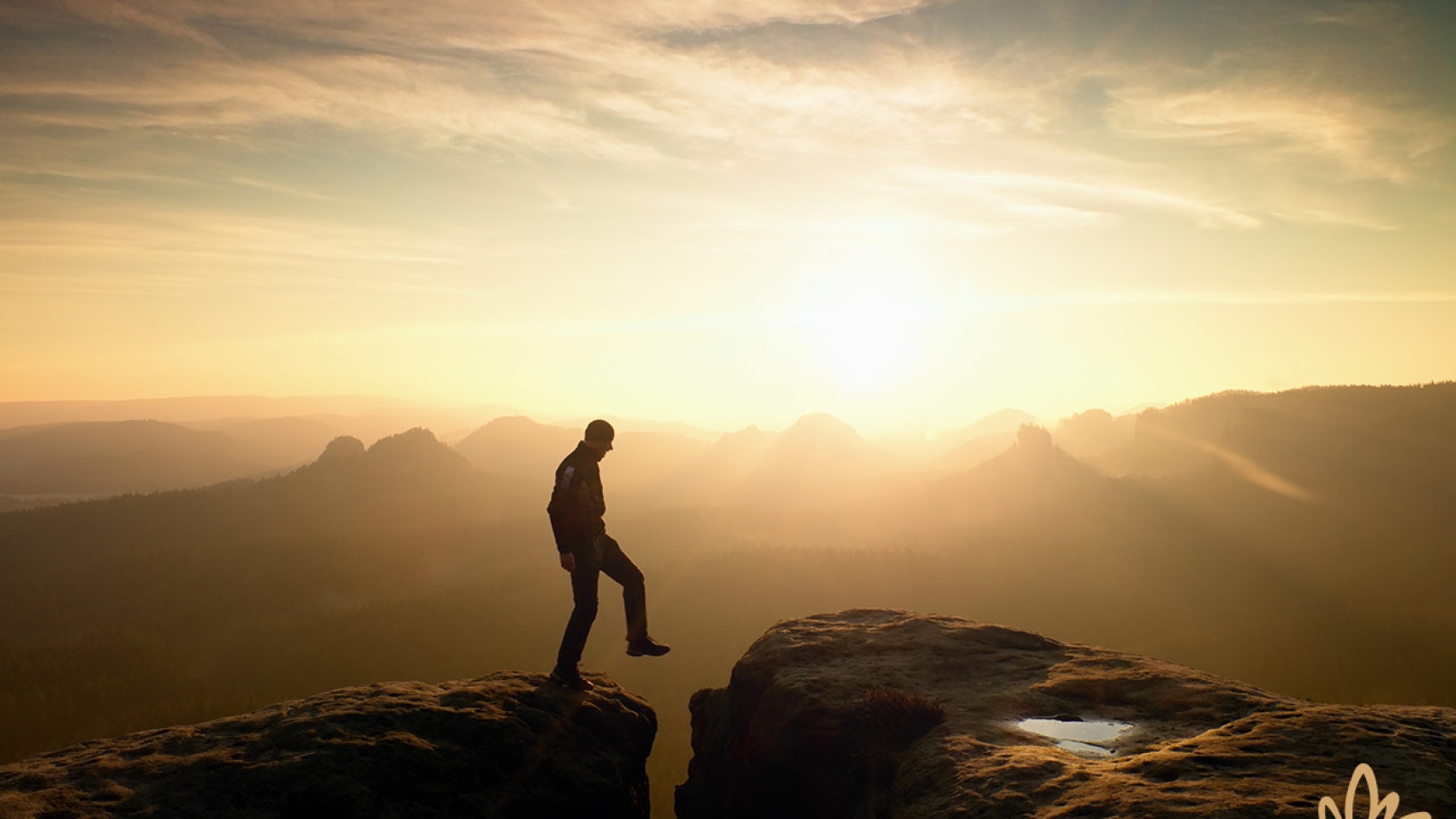
Like a wayward traveler who has voyaged to a distant land, the Sun finally stands still on December 21st. It pauses, holding its place in our sky, before finally returning North.
Think about it. The Winter Solstice is only the shortest day because the sun stands still and then returns North. It’s only the darkest day because the next day is slightly brighter. It’s only the lowest point because the light turns back.
The Winter Solstice is the Northern Hemisphere’s rock bottom. It’s the “darkest before the dawn moment.” And this “darkest before the dawn” can inform how we journey our own, Spiritual Solstices.
Our journeys this year have been unexpected and perilous. Oftentimes, it feels like we’re a passenger in our journeys, as opposed to a pilot. But we have a choice that we can make – an action that can give us insight, strength, and (hopefully) some community in these fragmented times.
We can pause.
On December 21st, I encourage all of us to pause – collectively, though separated. I want us all to feel the faint rays of the Sun and imbue ourselves with the energy of a star and a planet who have paused in extremity.
Absorb this energy. Coax out the intuition of this celestial stillness.
Let’s pause each of our journeys – for just that brief day – to take stock of how far we’ve gone, where we’ve come from, and where we wish to go. Let’s stand in our stillness, and look back at the joys we wish to recapture.
We can examine our choices, our habits, our relationships; and decide how we will carry forward.
The Winter Solstice is a blessed time! It’s a rare time for introspection, reflection, and change. This energy is mirrored in our cultural celebrations around winter. New Year’s Resolutions? What is that but a pause and a change of direction?
I know that the Winter Holidays can be a circus. We all work double-time to purchase that perfect Hannukah gift, make that perfect Christmas roast, and plan that perfect New Year’s celebration. It’s hard to pause when there’s so much to do!
But your spirit deserves a Solstice.
Embody that energy of the Winter Solstice in order to become an active participant in your own journey. It feels counter-intuitive, but by simply taking a day to be still, you will gain unprecedented agency and insight into your own voyage through life.
It’s always darkest before the dawn.
Deborah
Embracing the Liminality of 2020
I want to talk with you about liminality. About thin places. Thin times.
Liminality refers to a state of transition or of a rite of passage. It is an innate quality present within a space, a time, or a person.
Perhaps the most popular date of liminality would be Hallowtide – the three days making up Hallowe’en, All Saints’ Day, and All Souls’ Day, which I wrote and spoke about at length last Fall.
We see the liminality of Hallowtide reflected in our celebrations. We embrace our fears of death as we cuddle on the couch watching the latest horror film. We embody our fears as we dress in the clothes of our monsters and ghosts. We commune with death as we make offerings to our departed loved ones.
Hallowtide is a thin time. I want to talk about another thin time.
Friends, this year has been (for all of us) a very trying time. Many of us have lost loved ones. Many of us have had close calls with death ourselves. Destruction, anxiety, and illness have been more present this year than in many generations.
It appears that this year itself has been a thin time. The veil between our worlds feels gossamer where it once felt heavy.
It’s an uneasy time. This feeling of thinness between our worlds has made everyone feel uneasy.
As we depart from Hallowtide and move toward the Winter Holidays, it can be tempting to try and ignore the thinning of the veil. The Winter Solstice has always been a spiritual and natural “reset” for our world, bringing new vitality as the sun begins to increase in strength again.
So many have thought “2020 is going to be a year not to repeat. 2021 is my 2020 do-over.”
What you’re hoping for is to simply “patch up” the veil between our worlds. It’s a natural reaction to such a complicated time. It’s not fun being uneasy. You want that unstable feeling to end.
But these thin times are rare, and it is important to understand the opportunity, wisdom, and enlightenment that thin moments and thin places can offer.
Just as on Dia de Los Muertos, you commune with your ancestors, during the waning weeks of 2020, you must commune with the energy flowing between our worlds.
I know that is a difficult choice. After all, it sometimes feels that far more energy has flown from our world to the spirit world this year. It can be vulnerable to open yourself up to the other world. But embracing the power of liminality allows you to cultivate understanding and enlightenment, helping you start the new year on the right foot.
So how do you embrace liminality?
Find thin places. Thin places are physical, real places where the distance between our world and the spirit world is at its closest. These places may not be the same for everyone.
For some of you, these thin places might be as simple as a hill in an empty forest. For others, a grand ruin in a far-off country might be the thinnest of places. It’s a place where there is an immediate sense that a greater power is present. You feel connected to a force, an energy, a divinity that you can’t discern elsewhere.
Stand still in the thin places. Don’t interrogate. Be present, and allow yourself to become a vessel, a conduit for wisdom and light. Imbue yourself with the energy that crosses over.
As you approach the Winter Holidays of Christmas, Hannukah, Yule, Kwanzaa, and many others, fully enmesh yourself in the ritual of these holidays.
Ritual without meaning is ceremony. Fully realized ritual allows you to tap into the energy of this thin time.
Your rituals, whether it be lighting advent candles, burning the yule log, or baking Christmas cookies, further thins the veil between our worlds. Use your rituals to glean insight from the thinness of 2020. Use this insight to position yourself for 2021.
Let the thin times roll!

The Real Meaning of “Empathy”
When I was a child, I learned a very important lesson from my father. I was barely big enough to climb into Daddy’s pickup after he was done with work on Friday nights, when he’d drive around our small town to give away bags of oranges to the hungry. Along the way, much to my mother’s chagrin, he would often hand over his coat to someone who looked cold. A lawyer in our little town, and a Representative at the State Capitol, he used his influence to develop social justice programs to help the needy in our state. And when I became a lawyer and joined him in his practice, he taught me to take on pro bono (for free) clients along with the ones who could pay. Daddy was a sterling example of empathy in action.
We need a lot more empathy in the world these days. With 50 countries around the world ruled by dictators and despots right now, the concepts of representative government, respect for civil liberties, and human rights, have morphed into a general attitude of “let them eat cake.” Unfortunately, today’s authoritarians seem to be, more and more, supported by the middle class. The result is untold suffering for millions of people.
Empathy is a word we’ve heard tossed around a lot lately. But what does it actually mean?
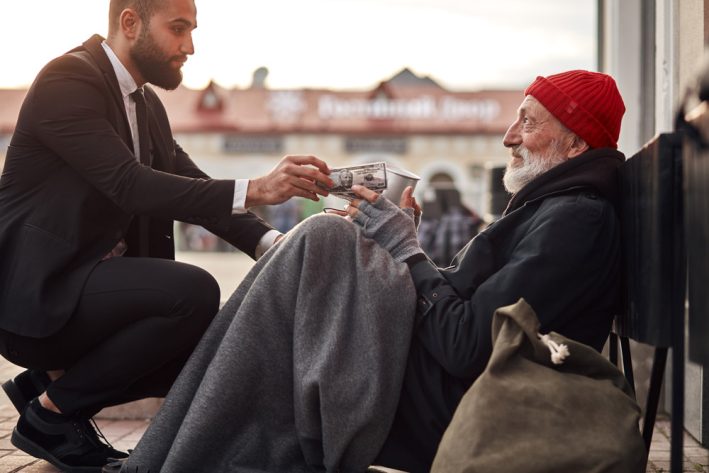
It means that when your friend’s aunt dies of Covid, you don’t say, “She’s in a better place.” When your neighbor loses his job, you don’t cheerfully announce, “See the glass as half full.” How many times have we all said when there has been a disaster, “our thoughts and prayers are with you,” instead of actually helping those who were impacted, thereby effectively bypassing the real work.
“Spiritual bypass” is a way to avoid or escape from uncomfortable emotions. Spirituality becomes a defense mechanism when it sees only “light and love” and does not acknowledge the authentic nature of all the elements of life, including the terrible truths of pain, suffering, sickness, and death. It’s like a politician flying over the scene of a fire or flood that caused massive destruction and loss of lives. It might make a memorable photo-op, but from that great height you can’t see the pain of a child who has lost a parent, feel the grief of a family that has lost its home, or inhale the stench of burnt carcasses.
So how can you react in a truly spiritual way to the suffering of others?
You can say, “I understand how hard this is for you. I know how sad I felt when my favorite aunt died a couple of years ago. What can I do to help: want to take a walk or can I bring you a casserole?” You empathize with their situation because you have experienced pain in your life and you connect through your common humanity.
While hugs are off the table right now, remember what you felt when you saw Princess Diana stop to hug a child? It wasn’t only her dazzling smile that made people love her; it was her compassion and her ability to connect with people. The Nigerian-born Baron Adebowale, a member of the House of Lords in Great Britain, saw the face-to-face work Diana did with the homeless and said, “Her humanity spoke to their humanity.”
That’s empathy. Your humanity speaks to someone else’s humanity. Your heart goes out to their heart, energetically. It’s like seeing those exhausted and overwhelmed nurses crying in the hospital hallway after they have held a phone up so the loved ones of a person dying alone of Covid can say their goodbyes. Your heart aches for the nurse, for the person who died of this viral scourge, and for the person on the other end of that crushing phone call. And for the others you know who will experience that pain until this pandemic, which has already killed over 1.27 million people around the globe, is over.
In January of 2010, a major earthquake in Haiti killed over 300,000 people and left 1.5 million without homes. A few days later, Hollywood actor Sean Penn landed in Haiti. He saw tens of thousands of people living in tents and lean-to’s and he set about digging drainage ditches and latrines, getting food and water supplied to the camp. Penn stayed on the ground in Haiti for months and continued to return there over the last 10 years. The nonprofit he started to focus on Haiti has now been expanded to respond to natural disasters in the Caribbean and Florida. Penn backed up his humanitarian ideals with both his money and his time (a far more valuable resource).
Empathy shows an understanding of someone else’s experiences because you yourself have experienced pain and can relate. Identification is the key. You connect to another, looking past differences and appreciating your commonality. You hurt; I understand because I have also experienced being hurt. Skin color, political affiliation, religion, gender—those are just the trappings on top of our common humanity and are irrelevant in that moment.
Katie Couric, when she was a co-host on NBC’s morning show, Today, did an incredibly empathetic act when she underwent a colonoscopy on air to underline the importance of testing for colon cancer; her young husband had died of the disease and her concern for others’ health led her to transform her personal tragedy into public good. That’s empathy, showing the unglamorous aspects of her personal life in order to help others avoid the same loss and grief.
Many young stars, who often come from very humble beginnings, are conscious of their ability to direct attention and empathy towards those who need help, and many do a lot of in-person volunteering along with writing checks. Taylor Swift teamed up with the Governor of Tennessee to combat internet sex crimes. Miley Cyrus works with underprivileged kids in the US and Haiti. Emma Watson, the Harry Potter actress, is known for her work in girls’ education in Bangladesh and Zambia. Selena Gomez is determined to help stop hunger for children in Africa. Popstar Nicki Minaj donates both time and money to a small village in India.
Empathy in action is not the same as sympathy. Sympathy means you feel sorry for what someone else is experiencing, while empathy means you actually feel what someone else is experiencing. The more we develop empathy – personally, in our institutions, and in our governments, the better our world will become. And empathy is different from being an empath. An empath is an emotional sponge, the opposite of energy healing: it is one of the first things I teach my energy healing students to avoid, as it is the opposite of the energy exchange desired.
Empathy may be the most important thing you can teach your children, as my father taught me. George Clooney, who often works for social causes, became a father for the first time in his 50’s. He said about his twins: “I want them to be interested in things. I want them to be compassionate about other people’s plights. Because that’s the thing, you know? You have to have some sort of empathy.”
So empathy is what we need. And you’ll feel better about yourself and the world. Empathy increases your communication skills and allows you to connect with others. When you can feel what another person is going through, when you listen more than you speak, you can respond in the best way possible. It helps you regulate your own emotions when you see a situation from another’s perspective. From an energy medicine perspective, your heart chakra energy is going to their heart chakra energy, and since energy knows no bounds of space or time, it’s instantaneous and effective. And did you realize that developing empathy is one of the best ways to benefit your health? When you see the world through the eyes of compassion, you are better able to handle stress, are happier, have less depression and anxiety, and a stronger immune system. You’ll be spreading a more positive and caring energy. When we all come from a place of empathy, it will create that same loving vibration in our families, our communities, our governments – in the whole world.
Dream Journaling: Tap Into Your Inner Wisdom for Guidance & Healing

Your dreams are filled with wisdom to guide you through every aspect of your life.
They give you access to knowledge beyond your ordinary, everyday awareness. They can show you the future, preparing you for challenges and opportunities. They can speak to your past, providing you with clues for healing old wounds. And they can guide you in the present, offering you wisdom for making the best decisions and honoring your soul’s desires.
A powerful way to start tapping into the wisdom of your dreams is to keep a dream journal.
Why you should keep a dream journal
The benefits of dream journaling are as vast as the realms your dreams take you to. Here are just a few of my favorite reasons to keep a dream journal.
Healing, transformation, and growth:
When you look back on your dream journals, you hold up a magic mirror that can reveal patterns in long-standing challenges. Your dream journal can even serve you as a data log that gives you insight into themes regarding your attitudes, beliefs, experiences, and actions.
You can also get precognitive glimpses of things that appear in your waking world later on. Dream journaling helps you develop a sixth sense, opening you to correct a course you’re on, restore your inner compass, expand your consciousness, or develop telepathic or clairsentient skills.
Brain balance:
Dream journaling can benefit your corpus callosum — the part of the brain that joins the right and left hemispheres, physically connecting your intuitive abilities with your analytic abilities.
In “Dreams Make Me Smarter,” one of our students wrote: “I let the dream images come to me, then write the dream in my journal, which engages my left brain. I pay close attention to any right-brain feelings about the dream. Then I brainstorm about any associations with those images or feelings. Working with dreams is a whole-brain exercise!”
Creativity:
Dreams offer you a treasury of images and symbols that can light your creative fire if you’re an artist. And even if you’re not, recording your dreams can inspire you to tap into the creativity inside you that yearns to be expressed.
Sketch that mountain or underwater temple when you wake up, then turn it into a deeply expressive painting or sculpture! Write down a dream-encounter as a short story, or see how it’s a clue into how to finish a scene you’ve been working on for your novel. Record that guitar line that came to you in your dreams. Whatever ways you express yourself — or would like to express yourself — journal your dreams to ignite your imagination.
How to keep a dream journal
Choose a notebook or a specially-crafted dream journal with thick, high-quality paper that you can joyfully write and sketch in.
Keep your journal near your bed and write your dreams in it as soon as you wake up. If you find that your bedside notes are barely legible, try transcribing them into a Google Doc later in the day.
While I suggest charging your phone away from your bedroom at night (so you can get a nightly retreat from constant digital clutter and melatonin-disturbing blue light), another option is to record a voice note as soon as you wake up. Then use a voice-to-text program to transcribe your dreams.
Ready to start recording the wisdom of your dreams?
Here are 5 journaling prompts to get you started:
- When was the dream? Note the date (including the year) so you can look back on the entry in the context of what was going on in your life and the world at the time.
- What happened in the dream? The key is to record your dream in as much detail as you can. Where were you? What was it like? What were the events? What did you do? Was anyone else there? What did they do or say? When did the dream take place? What did the events remind you of? If a detail seems too trivial or obvious to note, write it down anyway. When you look back on your dream entries, you’ll find that what might have seemed like useless details are highly significant in retrospect.
- What did you think or feel during the dream? Your internal experience is one of the most (if not THE most) telling aspects of your dreams. Did you feel elated, joyful, rejected, connected, relieved, anxious, relaxed, fascinated, blessed? Did you think “This reminds me of the time I…” Or maybe you thought “This is a place I’d love to….” Whatever your interior response was, make a note of it.
- How does the dream connect to your highest desires? This year, Spirit is really calling us to focus on what we want to create in our lives on this beautiful planet. We all long for something. Look back on the things you’ve desired in your past that you’ve manifested. That’s evidence that goals come to fruition, that “dreams come true”! So think about what you want at this point in your life. A new house? Healing from an illness? A fulfilling relationship? A rewarding career that suits your soul? Clean waterways? The end of injustice? Jot down anything about your dream that seems connected to your longing.
- What do you think the dream means? Don’t worry right away about dream interpretations like “owls represent wisdom” — you can look those up later if you’d like. For now, focus on writing down what significance the feelings, events, people, and images of the dream have for you. Because it’s your dream, you have the most insight into what it’s telling you.
Tap into the creative, healing wisdom of your dreams now!
If you want to start journaling right now, write down your response to one of these prompts:
- Last night I dreamed…
- When I was a child, I dreamed…
- The best dream I ever had was…
- A recurring dream I’ve had is…
- The other day I had the strangest dream…
Start writing now or when you wake up tomorrow, and watch the wisdom flow from your soul, through your pen, and into your life.
Dream on!
To learn more about tapping into the power of your dreams, you can checkout my course on Astral Wisdom here.

Seven Steps to Finding Love
You have to love yourself before you can get into a healthy relationship with another. Feeling good about yourself and who you are is a vital part of finding the right person for you.
Let’s look at how the process of love works in order to understand why loving yourself, or at least liking yourself, is important. When you initially meet someone, you want them to be enamored with you. You want them to think about you at least as much as you think about them; you want to feel desired. That feeling, however, will fade over time, usually much faster than you would like to believe. At most, initial infatuation lasts six months. The next thing we want from our partner is to be seen for who we are. It’s no good having someone fall in love with something we’re not; this dooms the relationship to failure. We want our partners to understand and accept us for exactly who we are. How, though, are they going to love you if you aren’t being you?
Say you are a woman, and you meet a guy you like. You suddenly become a shadow of your real self in his presence, either stronger or weaker than you really are. The time will come, eventually, when he will discover that you are not exactly what you made yourself out to be. He will become disillusioned and may want to end the relationship.
This is one reason that men often have an easier time finding and keeping dates than women do. Thanks to their genetic makeup, men are much more likely to like themselves for who they are. They behave around a woman exactly as they would when they were alone, allowing women to see who they truly are with no illusions or any change of attitude.
Women are also pressured to look a certain way. In 2010, of the 21.7 million cosmetic surgical and nonsurgical procedures that were performed in the United States, over 90% were done on women – breast augmentations, liposuction and Botox leading the way. And plastic surgery is on the rise.
If you want to find the ideal partner, it is vital that you like yourself for who you are. Try these seven steps to feel better about who you are, making it easier to reveal your true self to someone you meet.
- Respect yourself. This is actually difficult for many people. We are living in a society where we are taught to give respect to others but are not generally encouraged to give ourselves respect. It is vital to learn to respect yourself and to know that you are worthy of respect from someone else based on your qualities as a human being, not on your worldly success or your appearance.
- Set goals. Setting goals is a great way to help you to feel better about who you are and to learn to respect yourself. You should have two lists: one for short-term goals and one for long-term goals. As you work on these goals and complete them, cross them off of your list. You will feel proud of your accomplishments and see that you are worthy of respect.
- Let go of fear. Fear is what keeps us from doing the things we enjoy. Fear is behind every attempt to cover up our real selves. We are afraid someone won’t like us if they see who we really are. Letting go of fear is a process that is accelerated as we release our emotional wounds; that’s one of the things I help people do at workshops.
- Clear the energy from past relationships. If we don’t clear the energy from our past relationships out of our personal energy field, the one that surrounds your body, that old relationship can slow you down or make you feel confused, unfocused, unhappy, lethargic, or even make you sick and toxic. I can teach you shamanic exercises to help you clear that old energy.
- Stop criticizing yourself! Self-criticism never helps anything. Make a pact that you will no longer put yourself down. This will not only relax you but will also help you to look and feel better.
- Love the body you are in. The pressure that society and the media put on everyone can make it difficult to feel comfortable in your own skin. Most of us worry about some part of our body being not right—our nose, our hair, our height, and especially our weight. In fact, as long as you are eating a healthy diet and getting enough exercise to allow your body to work properly, you should stop trying to be something you are not and learn to enjoy your body.
- Develop your inner strength. Have you ever seen a young birch tree in a heavy wind? It bends. While harder trees crack and break, a birch tree sways and is still standing when the wind is done. This is because there is an inner core of flexible strength in the willow, which is what you should work on cultivating for yourself. Find that inner strength so that you can bend and sway with the changes in your life without breaking. We find our strength by uncovering and releasing the difficult emotions we have suppressed throughout our lives and seeing that living in our personal truth is the source of our true strength.
Once you like yourself, then you are able to enjoy a healthy relationship with another. Like all good things, it takes time to be able to truly like who you are, but once you do you will find that everything will change, even your relationships!

5 Easy Steps to Get a Better Night’s Sleep
This is the third blog in a row I’m focusing on sleep because we simply aren’t getting enough of it!
If you missed the first 2 blogs, you can read them here:
The Best Sleep Ever: Why You Need It and How to Get It
8 Natural Herbal Remedies for a Better Night’s Sleep
This week, let’s talk about 5 more easy, actionable steps you can take to improve your quality of sleep.
-
-
-
Limit your exposure to EMFs.
We are all very sensitive to electromagnetic radiation, and there’s little data out there on what it’s doing to us. How to counteract all that WIFI that’s coursing through your bodymind? Try grounding every day: in warm weather, walk barefoot. In cold, go outside and stand near a tree, even hugging it when the mood strikes you. Keep your phone a foot away from you, or, radical thought, put it on airplane. Turn off your WIFI in your home or apartment at night. Keep sections of raw silk where you work and where you sleep; silk absorbs EMFs.
-
Exercise before noon, not after.
The idea is to keep your core temperature lower as evening approaches, allowing you to sleep more easily because your body is cool. (more on that in my first sleep blog) Exercise will not only raise your body temperature but also release cortisol and adrenaline. Cortisol is a daytime hormone, that is the opposite of melatonin. When cortisol is high, melatonin is low. To get good quality sleep, cortisol needs to be low, so exercise early in the day. Plus, when you exercise in the morning, it produces feel-good brain chemistry that make you feel happy all day. Sleep naked, it will keep you cool and your partner will love it. Oddly enough if you keep your socks on, that will help lower your body’s temp, and you will fall asleep faster.
-
Make sure the air in your bedroom is fresh.
Even 100 years ago, we spent most of our day outdoors; now, we spend over 90% of our time indoors. Indoor air can be very polluted and dead, not carrying enough oxygen to oxygenate your cells. What to do? Open your bedroom windows during the day, if it’s too cold at night. Or install an air ionizer or a HEPA filter if your outdoor air is bad and opening windows isn’t an option. Bring in plants, they will purify your air for you. Sleep outside in the summer, like I do, and not only get great air, but exposure to the moon and stars, which balances the lunar, feminine energies in your body, relaxing you, and promoting good sleep.
-
Take magnesium at night.
Magnesium is necessary for good sleep; take it with a dash of calcium. Alternatively, eat a few bites of a banana (just a couple of bites, since they are very sweet), which will help you develop melatonin.
-
Meditate for just 10 minutes, no more.
That little bit of meditation will take off the edge and allow you to drop off to sleep easily. More would wake you up, so just 10 minutes.
-
-
Sweet dreams!

The Best Sleep Ever: Why You Need It and How to Get It
This is the time of year when everyone focuses on diet and exercise, but it’s sleep that needs our attention – the importance of sleep is vastly under-rated. When you get enough sleep, you rebuild your body and your mind: sleep releases human growth hormone, essential for staying young; it balances your appetite hormones (ghrelin and leptin), keeping you slender; repairs your DNA; speeds up muscle recovery; preserves your memory; and improves your ability to learn. What’s not to like about sleep! (Meditation does all these things too, so be sure to meditate once you do wake up.)
Even one night of poor sleep can throw you out of whack, making you over-do carbs and sugar the next day. Plus, staying up late causes your immune system to plummet, your blood pressure to rise, and inflammation to increase. Not a pretty picture.
To this day, every animal on the planet sleeps, so clearly sleep is not optional. Here are five steps to good sleep:
Step One: Spend a little time early in the morning, outside, letting your eyes be exposed to the morning light, so your all-important circadian rhythm gets set for the day.
Step Two: Spend a minimum of 15 minutes outside during the day, getting more natural light on your eyeballs, which will reinforce your body’s regular wake/sleep rhythm.
Step Three: Minimize the amount of blue light you are exposed to both during the day and the evening from devices like computer screens, TVs, iPads, and smart phones; blue light blocks the critical melatonin production that you need to sleep properly. Melatonin is generated in your pineal gland when it’s really dark. To prepare for that production, turn off the TV an hour before bedtime and make sure your devices are on “night shift” settings that warm the color of the screens. Check out an app like iristech.co for ways to minimize the amount of blue light you are exposed to from your screens. Or grab a pair of blue light blocking glasses from raoptics.com and be healthy and hip looking all at the same time.
Step Four: Go to bed at about the same time every evening, ideally within 15 minutes of your routine time. I spent many years on the farm, watching all the animals, and saw how well animals do this – always bedding down at the same time every night. Or sleeping standing up, as horses often do.
Step Five: Make sure your bedroom is as dark as possible. If you need your phone (on airplane mode, of course) to see the time, choose a red screen for that purpose. Wear an eye mask just in case light is leaking in under the door or around the drapes. Even your skin takes in light, so the darker the room, the better.
Step Six: Enjoy all the benefits of your prep during the day with a blissful night of sleep in a room that is between 60- 65 degrees Fahrenheit/15 – 19 degrees Celsius – your body needs to be in that temperature range in order to continue to produce melatonin and to stay asleep. And, if you wake up too early, simply meditate and chances are, you’ll drop back off to sleep before long. Happy ZZZs!