
Thin Places on St. Patrick’s Day
What the Celts understood about land, prayer, and spiritual perception
St. Patrick’s Day has become loud in the modern world. Green beer, parades, novelty hats, and a kind of cultural steamrolling that turns a saint into a mascot.
Underneath that noise is something older and worth recovering.
The Celtic spiritual imagination carried a phrase that still matters today… thin places. In Celtic Christianity, “thin places” refer to locations where the boundary between heaven and earth feels unusually close.
You can take that phrase literally, or you can take it as spiritual psychology. Either way, it points to a truth I’ve seen repeatedly in my work.
Some places make it easier to perceive what you normally miss.
Not because the place is magical. Because your system gets quiet enough to notice.
What “thin” actually means
A thin place isn’t a theme park for spiritual feelings.
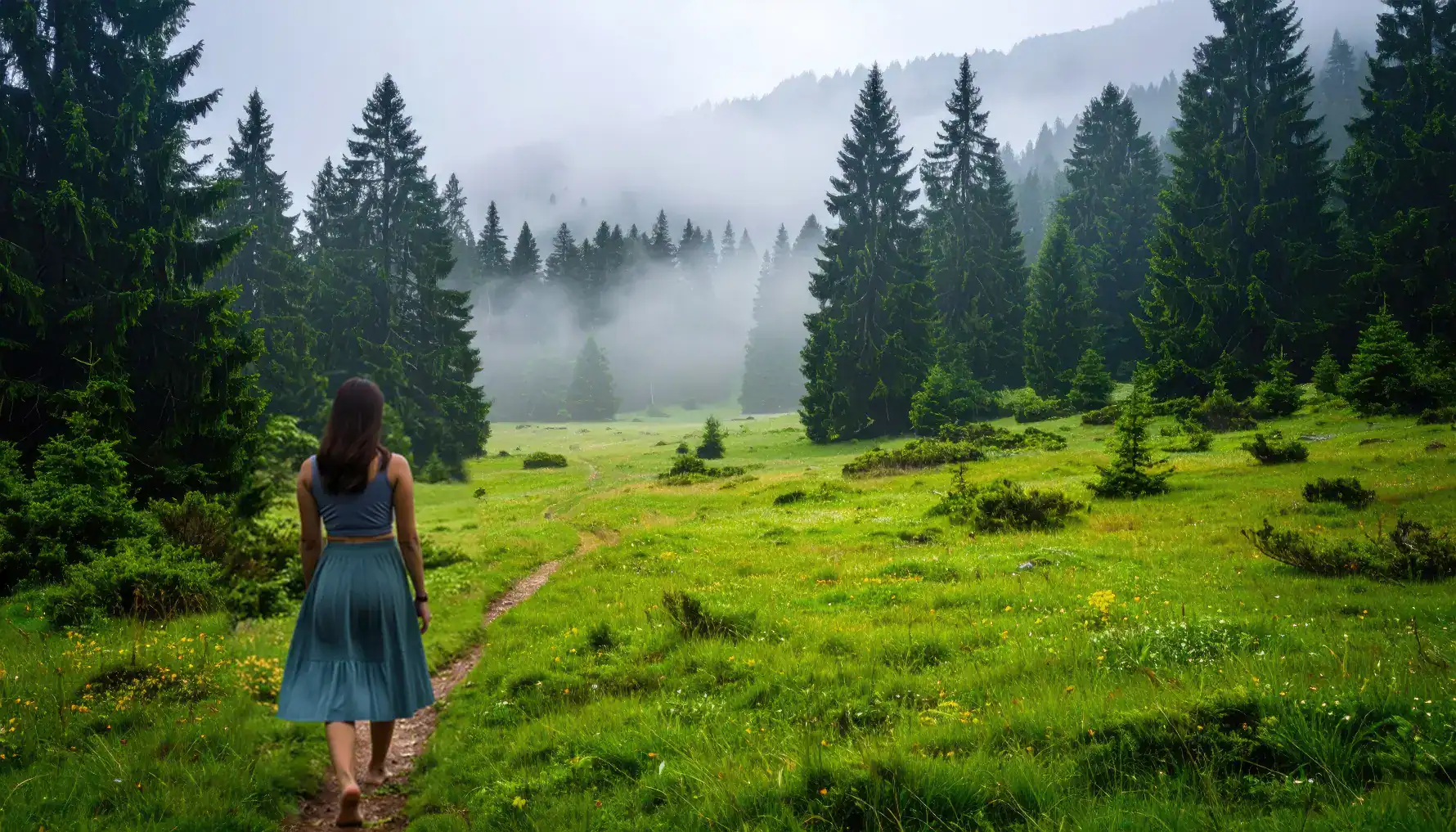
It’s often simple. Wind. Stone. Water. A path worn by decades of footsteps. Silence that doesn’t feel empty, it feels like a presence.
The Celts spoke about thin places as if the veil between the visible and invisible becomes less dense.
People have described this sensation for centuries, even when they use different language. You see it in Christian contemplative traditions. You see it in indigenous relationships to land. You see it in pilgrimage, where the journey itself is part of the preparation.
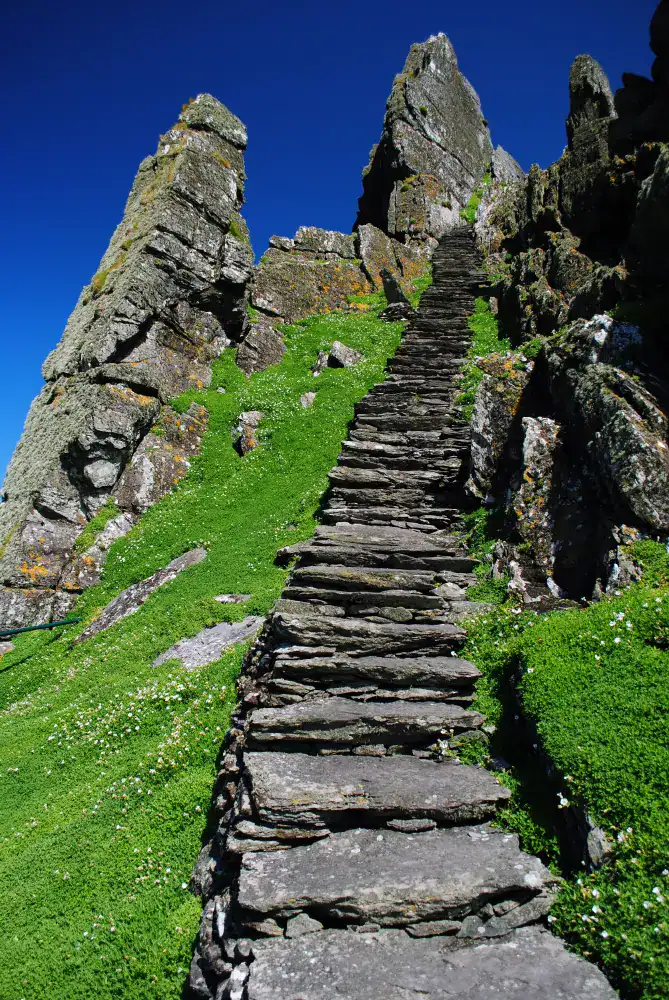
And you see it in the fact that people across time have been willing to climb cliffs, cross seas, and walk long distances to reach a place that helps them remember God, remember themselves, remember what they already knew.
Why St. Patrick matters here
St. Patrick’s feast day is March 17, honored as the date associated with his death. That alone tells you this day began as a spiritual observance before it became a cultural festival.
Patrick’s historical life is layered with legend, but what matters for our purposes is the spiritual pattern around him. A life shaped by captivity, hardship, prayer, and a return to the very land where his life was broken open.
The deeper point is not about Ireland as an idea. It’s about the way place and prayer intertwine.
Prayer changes people. Repeated prayer changes a location.
Land holds memory
One of the most consistent truths in spiritual life is this.
Energy accumulates.
So does attention. So does devotion. So does grief. So does honesty.
This is why certain rooms feel heavy and certain rooms feel calm. This is why a chapel that has held generations of quiet prayer can feel different from a building that is architecturally beautiful but spiritually unused.
Ireland has extreme examples of this.
Skellig Michael, for example, is an early medieval monastic site on a rocky island off the Kerry coast, so isolated that even reading about it makes your body tense a little. UNESCO describes it as among the most dramatically situated early medieval island monasteries.
People didn’t build places like that for comfort.
They built them because they wanted their lives to be organized around spiritual clarity. They wanted fewer distractions. Fewer negotiations. Less compromise with noise.
The same is true for sites like Iona, long associated with Celtic Christian devotion and pilgrimage.
These places aren’t powerful because someone wrote a brochure about them.
They’re powerful because people showed up there for centuries and did the work.
Thin places aren’t always far away
Here’s where I want to bring this home.
Some people hear “thin places” and immediately think of travel. Cliffs, islands, ruins, pilgrimage routes.
But the deeper teaching is portable.
A thin place can be a room in your home where you stop lying to yourself. It can be a corner chair where you pray every morning, even if you pray badly. It can be a path you walk at dusk where your mind settles enough to hear what you’ve been avoiding.
Thin doesn’t always mean dramatic.
Sometimes it means honest.
A thin place is where the usual defenses don’t work as well. The stories don’t stick. The nervous system stops bracing. You become more available to truth.
How to recognize a thin place
People often ask me how to tell whether a place is spiritually supportive or whether they’re projecting onto it.
I’ll give you a grounded way to approach it.
A thin place tends to produce a few consistent effects over time:
- Your breath drops lower.
- Your mind slows without force.
- You feel more present in your body.
- Emotional truth becomes easier to face.
- Your intuition becomes quieter and clearer.
This is different from the sensation of being emotionally stirred.
A place can be stirring and still be confusing.
A thin place usually clarifies. It doesn’t hype you up. It doesn’t inflate your story. It makes it easier to be real.
The spiritual value of contained environments
If you’ve ever tried to do serious inner work while living inside normal life, you know the problem.
You get a glimpse of clarity. Then a text comes in. Then an email. Then a family obligation. Then the old rhythm swallows the insight.
This is why spiritual traditions created dedicated spaces.
Monasteries. Retreat houses. Hermitages. Sanctuaries.
These spaces hold a rhythm that supports depth. They hold repetition. And repetition is how spiritual perception strengthens.
When people practice in the same field day after day, something changes in the system. The body learns that it’s safe to soften. The mind stops scanning for the next hit of information. The heart becomes more available.
That’s not romantic language. It’s the nervous system responding to consistency.

A personal invitation for this season
On St. Patrick’s Day, I like remembering the original impulse beneath the celebration.
A longing for the sacred.
A longing for a life shaped by prayer and courage, not by distraction.
If you feel that longing in yourself right now, treat it with respect. Don’t dismiss it as sentimentality. Don’t wait until life gets simpler. Life rarely gets simpler on its own.
One of the reasons I host the LifeForce Energy Healing® Scottsdale Retreat each year is to give students a contained environment where spiritual perception can deepen naturally.
This May 14–17, 2026, we’ll gather at The Casa in Paradise Valley, just outside Scottsdale. The land has held decades of spiritual practice, and the retreat schedule is designed so you can stay inside the same field for several continuous days.
If your system has been craving a cleaner frequency, more quiet, more truth, Scottsdale is a strong container for that.
You can explore the retreat details here >>
And wherever you are today, I’ll leave you with this.
A thin place isn’t something you chase.
It’s something you recognize… and then you show up, consistently enough that your own life starts to become one.